
Bending polycarbonate — clean form with less assembly
Polycarbonate combines low weight, high impact resistance and the ability to transmit or diffuse light. Cut and bent accurately, a flat sheet becomes a finished enclosure, cover, guard, light element or structural part — with fewer joints and a clean, consistent outline.
At NEON.BG we combine cutting and bending to suit the shape in hand. Holes, channels, contours and bend lines all come out of one sheet, and the finished part can then be built up with metal, plastic, LED or other components.
Why bend the part at all
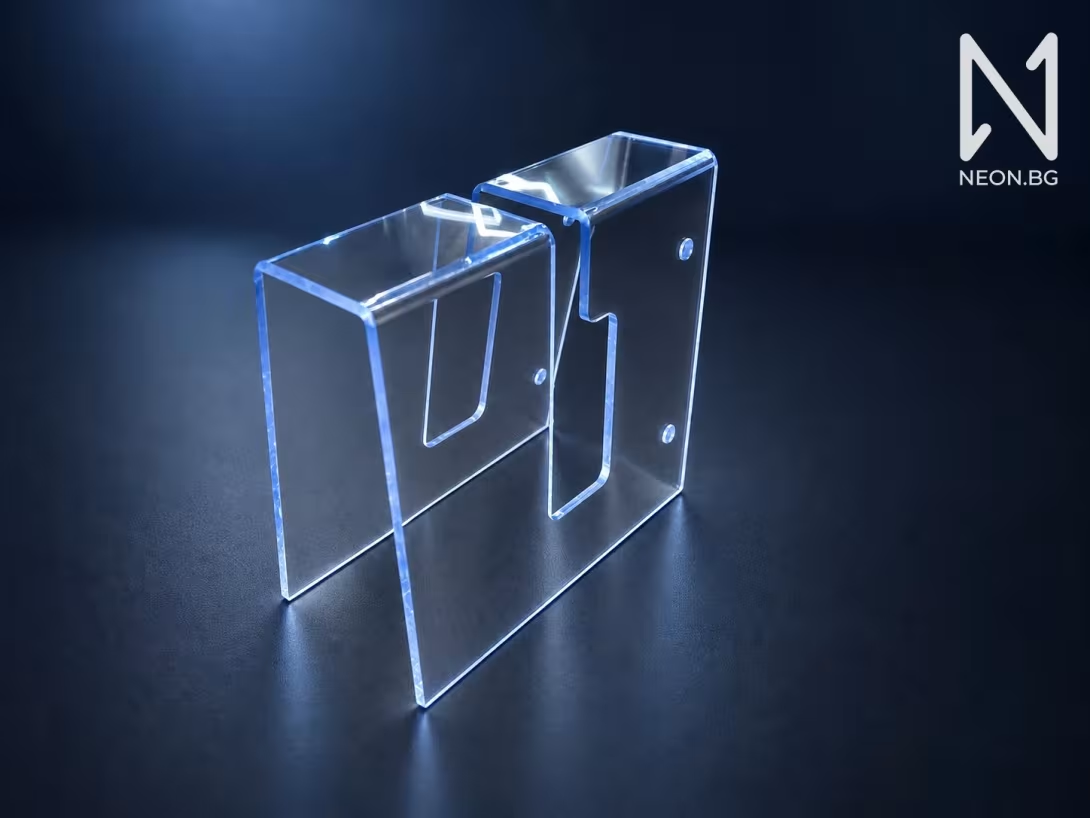
Bending lets a single sheet do the work of several joined pieces. With the right design that means fewer bonded seams, faster assembly and a cleaner look. The bend itself gives the part its form and can add stiffness without a separate profile.
That does not mean adhesive always disappears — whether it is needed depends on the design, the load and the way the part is mounted. The advantage is that the number of joints can be cut down at the design stage, leaving only the ones that are genuinely required.

Does it work for illuminated parts?
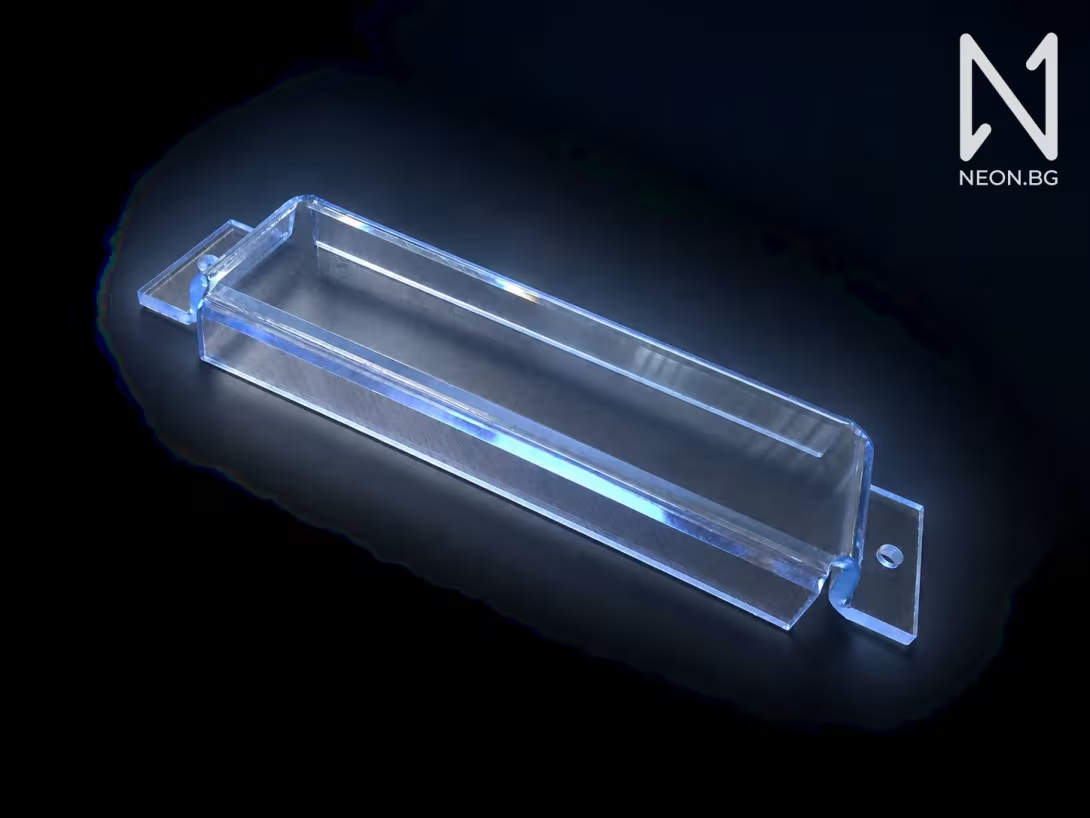
Yes. Clear polycarbonate transmits light and picks out edges and contours, while the opal grade diffuses and softens it. That makes it suitable for illuminated enclosures, signage elements, diffusers, protective covers and technical parts with LED lighting.
An even lighting result depends on more than the bend: the grade of sheet, the thickness, the colour, the distance to the light source and the geometry of the enclosure all matter. The lighting effect is therefore assessed as part of the whole part, not from the material alone.


Cutting, bending and combining in one process
The best result usually comes from a single process sequence: the final size, the holes and the bend lines are settled first, then the part is cut and formed with the allowances already built in. This matters because polycarbonate is elastic and springs back once it is released from the tool.
We can produce one-off prototypes and series, as well as parts intended for later assembly with sheet metal, aluminium profiles, other plastics, fasteners or lighting.
The general rules for bending are set out on Sheet metal bending, and cutting the same material on Cutting polycarbonate.
Technical limits of the bend
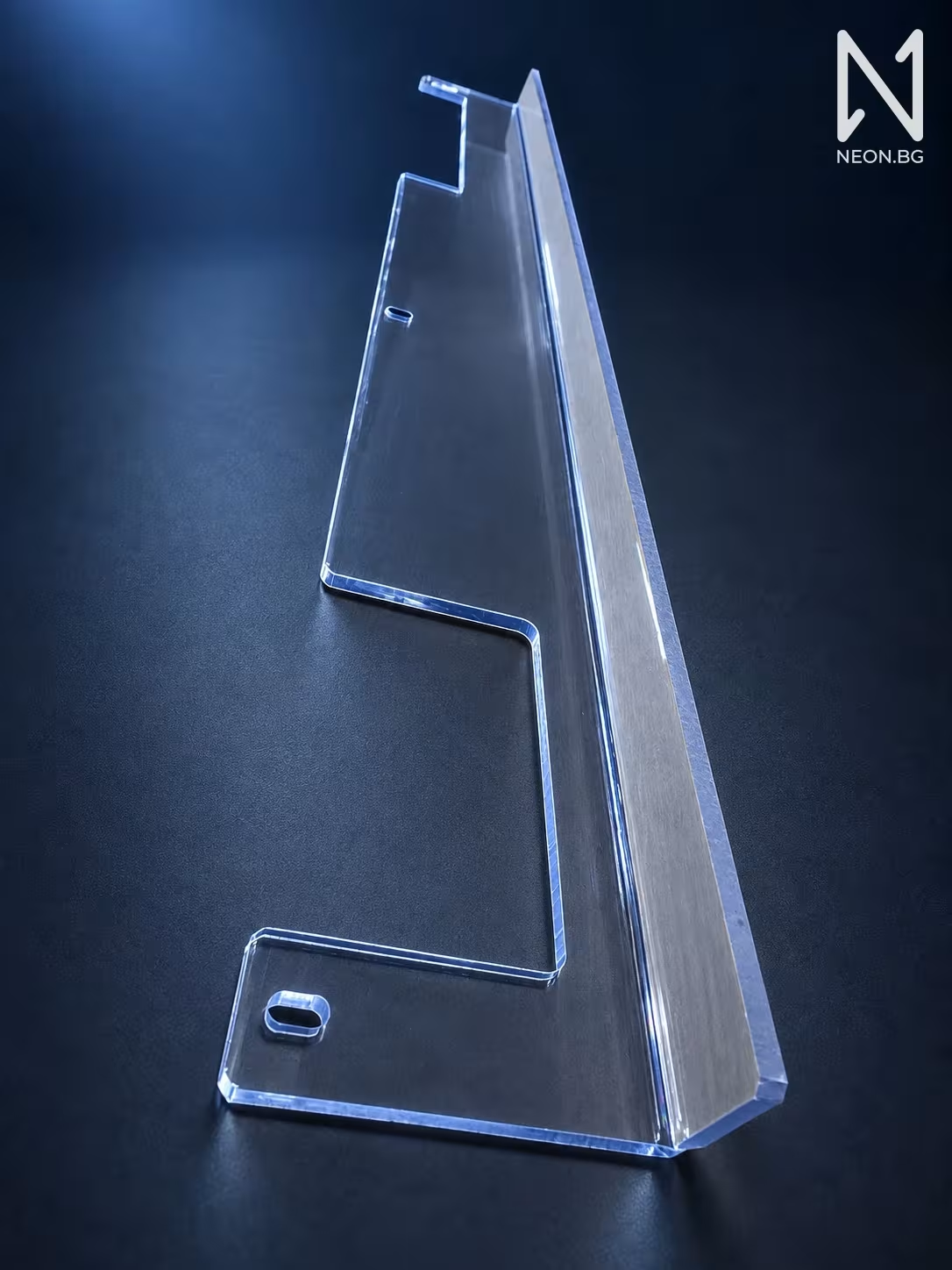
Three values decide what can be bent from polycarbonate and how the drawing is prepared. They belong to the material, so they hold on both of our press brakes.
- Thickness 2–5 mm. The limits come from the material itself, not from the machine — below 2 mm and above 5 mm polycarbonate breaks when bent.
- Die V12 or wider. A hard limit, not a recommendation: a narrower die tears the sheet. V12 itself is allowed — at 2 mm the part runs on the same die that steel uses at that thickness.
- K-factor as for structural steel. The flat pattern is calculated from the same values, so polycarbonate needs no table of its own.
Strength and fire behaviour
Polycarbonate is known for its high impact resistance, but the finished part still has to be sized for the actual load, the bend radius and the way it is fixed.
Polycarbonate should not be described in general terms as “non-combustible”. Fire behaviour depends on the specific grade, the thickness and the certified classification of the material. Where a project carries regulatory requirements, we work to the technical data sheet and the certificate of the chosen sheet.
What we need before you order
To propose a suitable process we need: the grade and thickness of the polycarbonate, the size of the part, the required angle and radius, the drawing and the intended use. If there is a UV layer, a hard coating, printing, film or a special surface, tell us in advance — not every coating suits every bend line.
Frequently Asked Questions
Does polycarbonate crack when bent?
Not if the thickness is within 2–5 mm and the die is V12 or wider. A narrower die tears the sheet, and below 2 mm or above 5 mm the material breaks whatever tooling is used.
What thickness of polycarbonate do you bend?
From 2 to 5 mm. The limits come from the material itself, not from the machine, so they apply equally on both of our press brakes.
What is the minimum bend radius?
It is set for each part, but it has a lower limit. At the minimum working thickness of 2 mm the inside radius is 2 mm — the same as for 2 mm structural steel on the same V12 die. For thicker sheet the radius grows with the thickness and the die. The exact figure is agreed from the drawing, before production starts.
How is the flat pattern calculated for polycarbonate?
With the same K-factor as structural steel. No separate table is needed for polycarbonate; the flat pattern is worked out from the same values.
How does bending differ from thermoforming?
Bending is done on a press brake along a straight line and leaves the surface of the sheet as it is. Thermoforming needs heat and a mould, and reshapes the whole part rather than a single bend line.
What do you need in order to review a part?
The grade and thickness of the sheet, the size of the part, the required angle and radius, the drawing and the intended use. If the sheet has a UV layer, a hard coating, printing or film, tell us in advance.
More bent polycarbonate parts
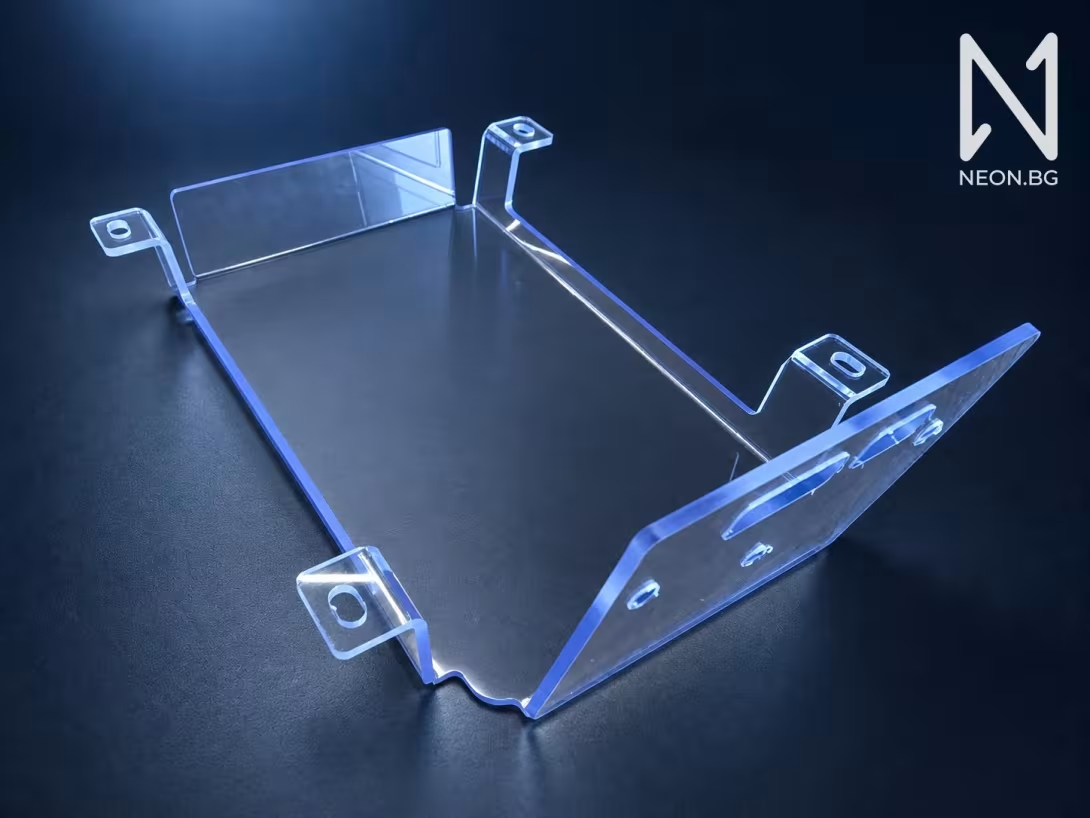
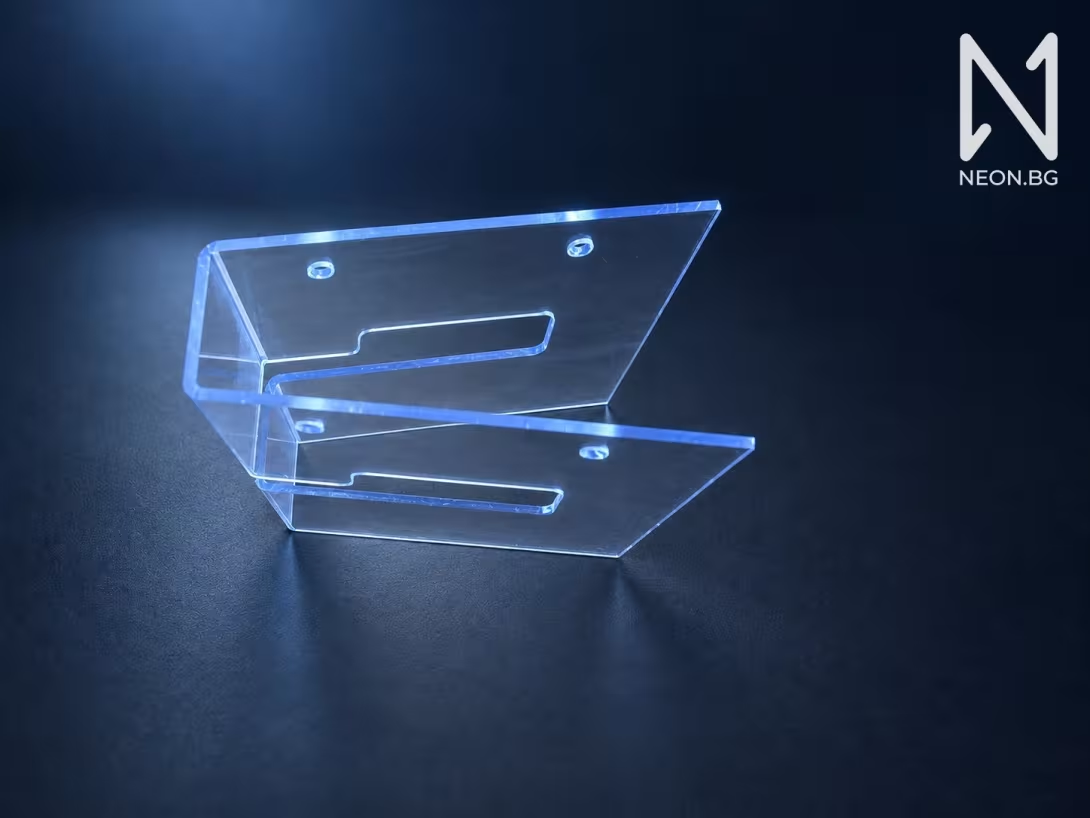
Further frames from the same batch — different shapes, cut-outs and mounting tabs, all bent from clear polycarbonate.




Send a drawing
Send a drawing or a sketch to info@neon.bg. We will review the part as a complete job — cutting, bending, holes, assembly and preparation for lighting or installation.